Better Security Gives You More Placement Flexibility
Concealment is one layer of security, but the safe itself is another. A lightweight RSC safe differs greatly from a substantially constructed, burglary-resistant safe, even if both are marketed to secure valuables.
One often overlooked layer of security for a home’s valuables is concealment. You may have metal boxes that lock and are marketed as safes, but a lightweight safe from Amazon or Stack-On Safe that’s been recalled half a dozen times won’t stand up to a burglary attack. If you absolutely need a cheap, ineffective safe, concealment is the way to go. Hide that safe somewhere weird a burglar would never think of!
Buying a quality, American-made, burglary-rated safe like a Liberty Safe or AMSEC safe gives you more options. Hiding it doesn’t necessarily become a must-do; it’s just another layer.
Underwriters Laboratories (UL) maintains separate standards for residential security containers and burglary-resistant safes. Basic safes have an RSC rating, while B-Rated and TL-Rated safes offer advanced burglary protection. If you have a TL safe, you have one of the most secure safes on the planet, and if you keep a low profile with your gems and jewels, concealment won’t have to be a high priority. The safe’s construction matters when you decide how much you need to rely on hiding it.
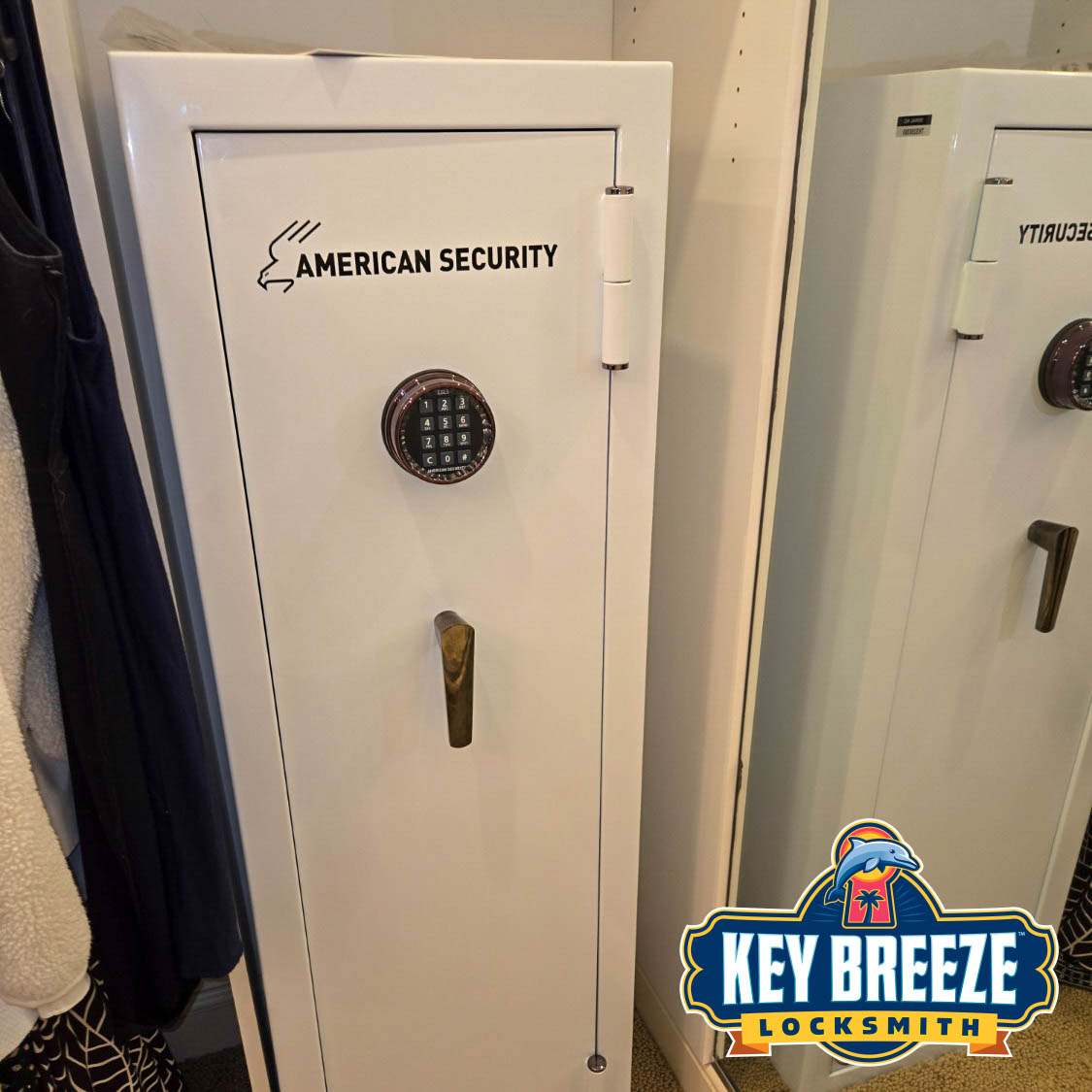
If you have invested in a high-quality safe, anchored it correctly, and protected the home with other security layers, you may reasonably decide that accessibility matters more than maximum concealment. We’ve installed beautiful, high-end safes that were intentionally designed to be showpieces in luxury closets.
We’ve also seen what a good safe can do when concealment fails.
The Burglars Who Spent 45 Minutes on One Safe
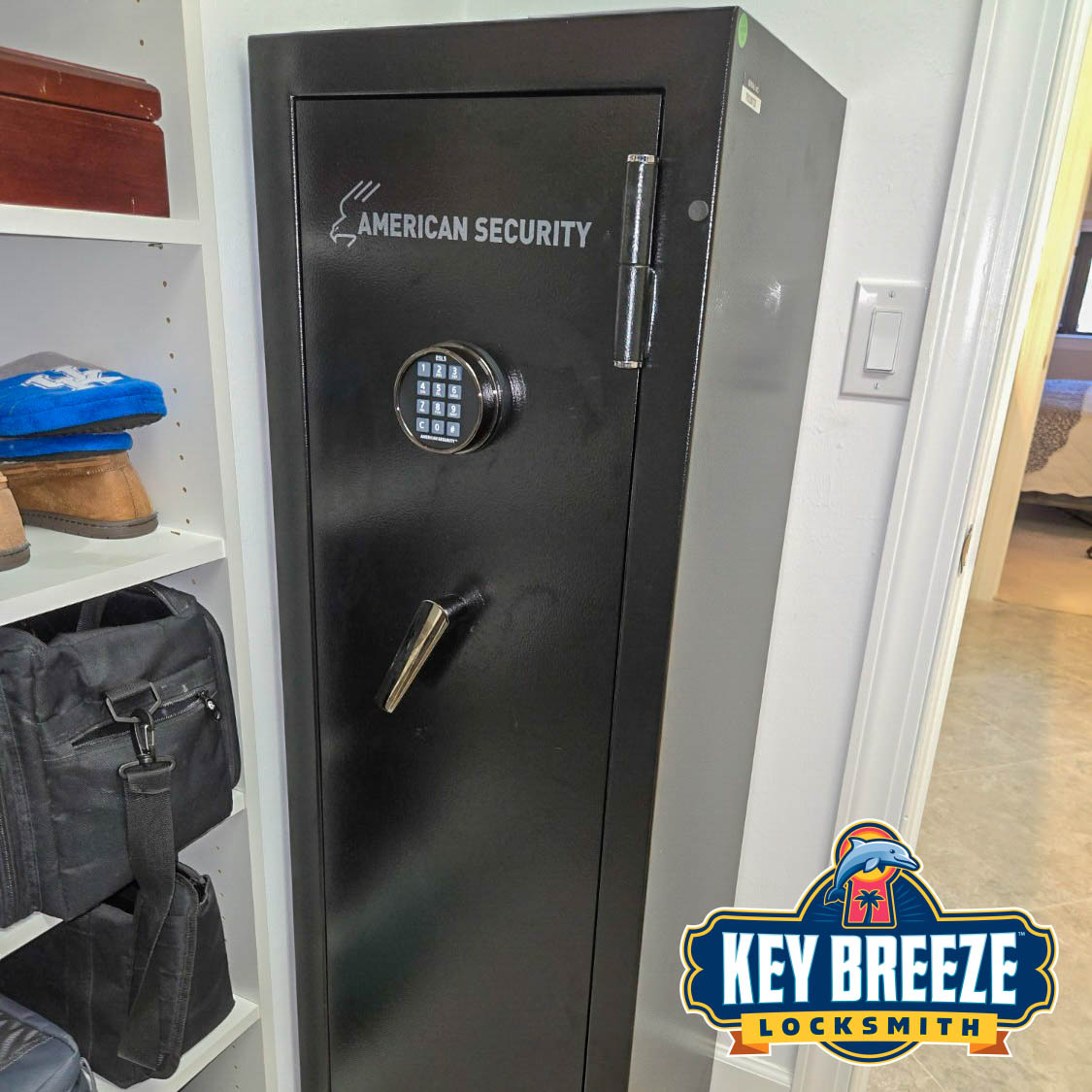
About ten years after we installed an AMSEC gun safe for a Pelican Marsh customer, their home was burglarized. The burglars found the safe and, rather than grabbing a few easy valuables and moving on, became fixated on getting inside it.
They spent an unusually long time in the house, and the police estimated they spent about 45 minutes attacking the safe with a variety of tools, but couldn’t get it to open.
When the homeowners returned, their sliding door was shattered, their safe was badly scarred, and the evidence of the attack was everywhere, but the door was still tightly closed; it didn’t give a millimeter. The burglars eventually became so frustrated that they abandoned the attempt, left tools behind, and fled without getting what they had targeted inside. As a side note, some manufacturers, like Liberty Safe will replace or repair a safe completely for free under their lifetime burglary attempt warranty!
That job shaped how we think about safe placement. Hiding a safe is useful, but buying a safe that can protect its contents once someone with bad intentions finds it matters even more. For especially valuable collections, like the diamond the old lady threw into the sea at the end of the Titanic, we may recommend both strategies, and then some! One of our favorite clients placed a decoy safe in her closet and filled it with her costume jewelry. The fancy diamond jewelry and her Birkin collection are in a TL-safe that is hidden behind a false door you’d never suspect. If you have highly valuable items or are a high-risk target, a decoy safe can help you come out on top when a burglar strikes. Floor safes, wall safes, and high-security TL-rated safes in an unexpected part of the home, concealed in a cabinet, are ideal.